Roof runoff control
Buried Downspout Drainage in Birmingham, AL
Your roof is the largest impervious surface on the property. Buried downspout drainage decides where all of that water lands.
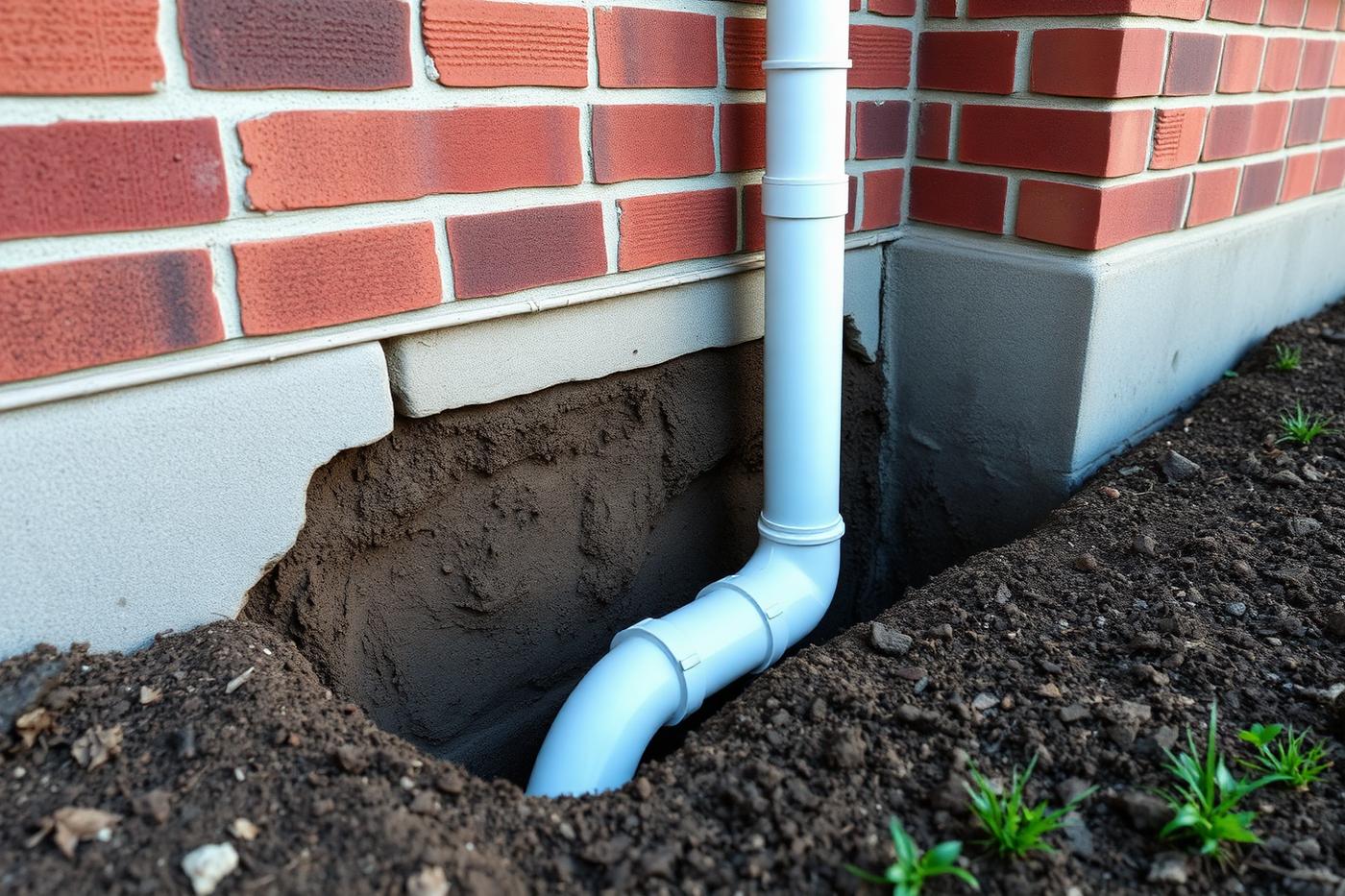
A moderate storm on an average Birmingham roof produces thousands of gallons. Splash blocks and short surface extensions move that volume a few feet — often still inside the zone where it can soak toward the foundation, wash mulch out of beds, or create the wet strip that never dries.
Buried downspout drainage connects the gutter system to solid underground pipe and carries roof water to a controlled outlet well away from the structure. It is one of the highest-value drainage upgrades because it removes a large, predictable water source from the equation.
Symptoms
Signs your roof water is the problem
- Eroded trenches or splash marks under downspout discharge points
- A permanently soggy strip along one side of the house
- Mulch repeatedly washed out of foundation beds
- Water staining or moisture at the foundation edge after storms
- A wet lawn area that lines up exactly with a downspout run
Diagnosis
Why surface extensions fall short
Too short to matter
A four-foot extension still discharges inside the backfill zone around the foundation.
Flat landing area
Water released onto ground with no fall simply spreads and sits.
Volume concentration
Half a roof can drain to a single downspout, producing a jet of water in a hard rain.
Downhill return
On sloped lots, water discharged uphill of the house comes right back toward it.
Process
How the system is installed
1. Downspout inventory
Each downspout is assessed for roof area served and where its water currently goes.
2. Route planning
Trench routes are chosen with fall toward a viable discharge point.
3. Connection
Downspouts are adapted into solid pipe, typically with a cleanout or debris provision.
4. Piping
Solid, non-perforated pipe carries roof water past the foundation zone without releasing it into the soil.
5. Outlet
The line terminates at a daylight outlet, pop-up emitter or basin, sized for storm volume.
Honest scoping
When something else should come first
- If the ground beside the house slopes back toward the structure, grading has to be corrected as well — piping alone will not fix negative slope.
- If the property has no downhill outlet, the discharge strategy must be resolved before burying anything.
- Where roof water and surface runoff converge, buried downspouts are usually paired with a catch basin or yard drainage line.
Birmingham Metro
Birmingham context
Mature oak and pine canopy across much of the metro means gutters carry needles and leaf litter, so buried lines need debris provisions and accessible cleanouts.
On hillside lots, a buried line can often reach a natural daylight point on the low side of the property, which is the most reliable discharge type — no pump, no reliance on infiltration.
Budget
What moves the price
Every project is priced on site conditions. These are the factors that push a project up or down within the estimated ranges in our Birmingham cost guide.
- Number of downspouts being connected
- Total pipe length and trench depth
- Outlet type and distance
- Obstacles: walks, driveways, tree roots, irrigation
- Cleanouts and debris management provisions
- Landscape and sod restoration
Want a figure for your specific property? Submit the project details and they can be reviewed by a professional serving your area.
Request a Drainage EstimateQuestions
Frequently asked
Far enough that the water cannot return to the foundation backfill zone and onto ground that continues to fall away. The distance depends on slope, soil and the volume the roof produces.
Project request
Request Local Drainage Pricing
Two short steps. Share your ZIP code and the drainage problem, then your name and phone number so the request can be reviewed locally.
- ■No obligation and no cost to submit
- ■Takes less than a minute
- ■Your phone number is private form data