Exterior discharge routing
Sump Pump Discharge Drainage in Birmingham, AL
A sump pump only moves water out of the basement or crawl space. Where it lands is a separate design problem — and often an unsolved one.
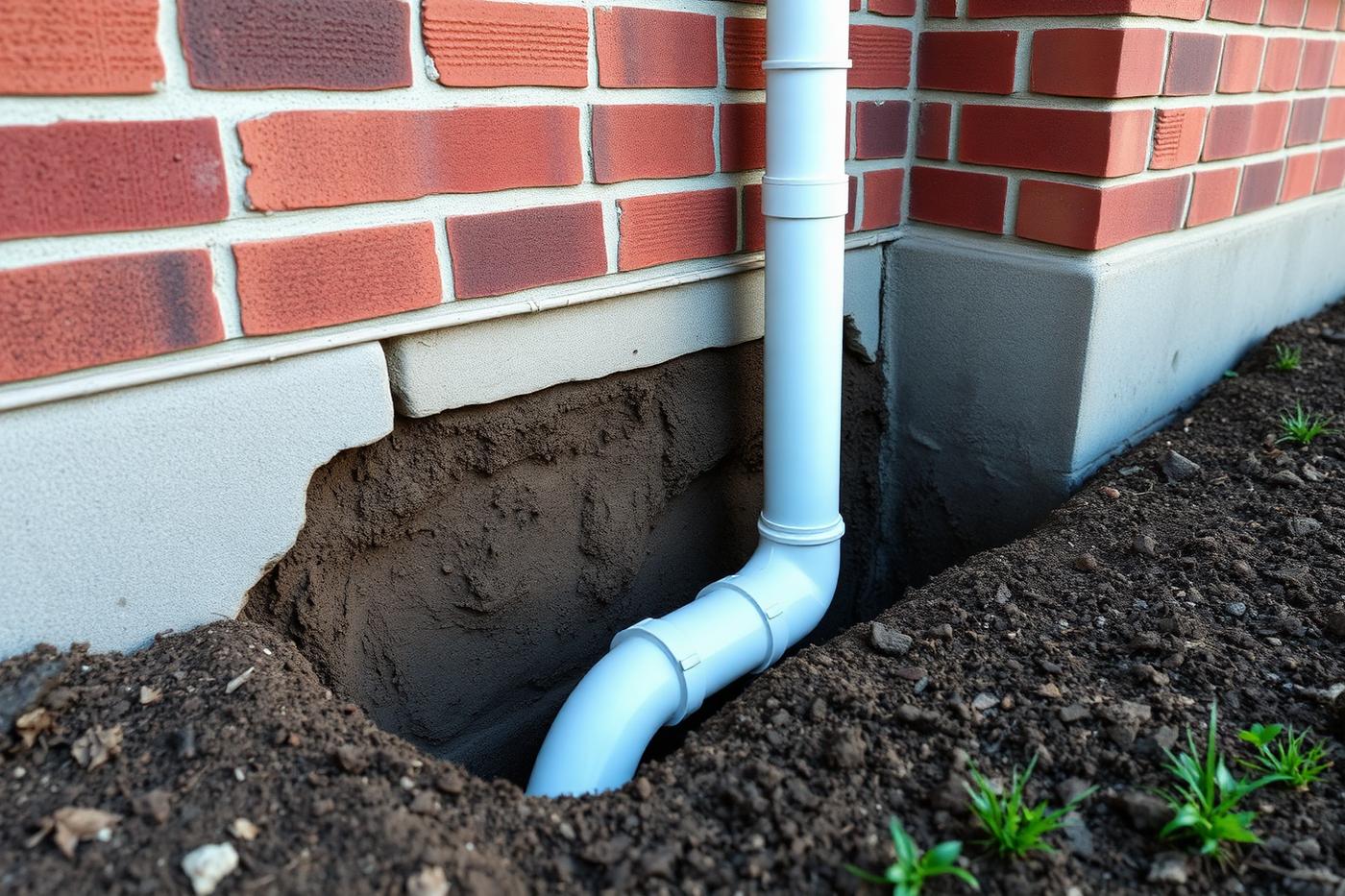
The most common sump discharge mistake is short-cycling: the pump pushes water a few feet outside, the water soaks back down along the foundation, returns to the drain tile, and the pump runs again. The equipment works perfectly while the property recycles the same water.
Proper discharge drainage carries pumped water in a dedicated solid line, well past the foundation backfill zone, to an outlet that releases it where it will continue moving away from the structure.
Process
How discharge drainage is built
1. Confirm pump output
The volume and cycle behavior determine the pipe size and outlet type needed.
2. Plan the route
A path with continuous fall away from the structure is selected to a legitimate outlet.
3. Install solid pipe
Non-perforated pipe is trenched so the water is not released into the soil along the way.
4. Provide the outlet
A daylight discharge or pop-up emitter releases water where it drains away, with freeze and debris considerations.
5. Add protections
Cleanouts and check provisions keep the line serviceable and reduce backflow risk.
Symptoms
Signs the discharge is the weak link
- Pump cycles repeatedly long after rain has stopped
- A saturated or eroded patch right where the discharge exits
- Discharge line ending on flat ground close to the wall
- Water reappearing in the sump minutes after each cycle
- Discharge point uphill of the foundation on a sloped lot
- Line visibly crushed, disconnected or buried under mulch
Honest scoping
Related work worth checking
- If the surrounding grade slopes toward the house, regrading should be corrected alongside the discharge line.
- If groundwater arrives from an uphill slope, an exterior interception drain may reduce how much the pump has to handle in the first place.
- If the outlet has nowhere to daylight, the whole drainage strategy for the lot needs to be resolved first.
Diagnosis
Why discharge routing fails
Too short a run
Water released inside the backfill zone travels straight back to the drain tile.
No fall at the outlet
A line ending in a level or low area holds water and can back up into the pit.
Shared with roof drainage
Tying sump discharge into an overloaded downspout line can cause backflow during storms.
Freeze or debris blockage
An unprotected outlet can block, leaving the pump running against a closed line.
Birmingham Metro
Birmingham context
Crawl spaces are common in the metro's older housing stock, and crawl space sump systems have exactly the same discharge problem as basement systems — often with even less thought given to where the water goes.
On hillside properties, gravity discharge to a low point on the lot is usually achievable, which is far more reliable than depending on infiltration in dense soils.
Questions
Frequently asked
Through a dedicated solid line carried past the foundation backfill zone to an outlet with continuous fall, so the water leaves the area rather than soaking back toward the drain tile.
Budget
What moves the price
Every project is priced on site conditions. These are the factors that push a project up or down within the estimated ranges in our Birmingham cost guide.
- Length of the discharge run
- Trench depth and soil conditions
- Outlet type and construction
- Obstacles crossed: walks, drives, beds
- Cleanouts and freeze protection details
- Restoration of disturbed surfaces
Want a figure for your specific property? Submit the project details and they can be reviewed by a professional serving your area.
Request a Drainage EstimateProject request
Request Local Drainage Pricing
Two short steps. Share your ZIP code and the drainage problem, then your name and phone number so the request can be reviewed locally.
- ■No obligation and no cost to submit
- ■Takes less than a minute
- ■Your phone number is private form data