Whole-property drainage
Yard Drainage Solutions in Birmingham, AL
Yard drainage is the plan for the whole property — not one product. It decides where rain lands, where it collects, and where it is allowed to leave.
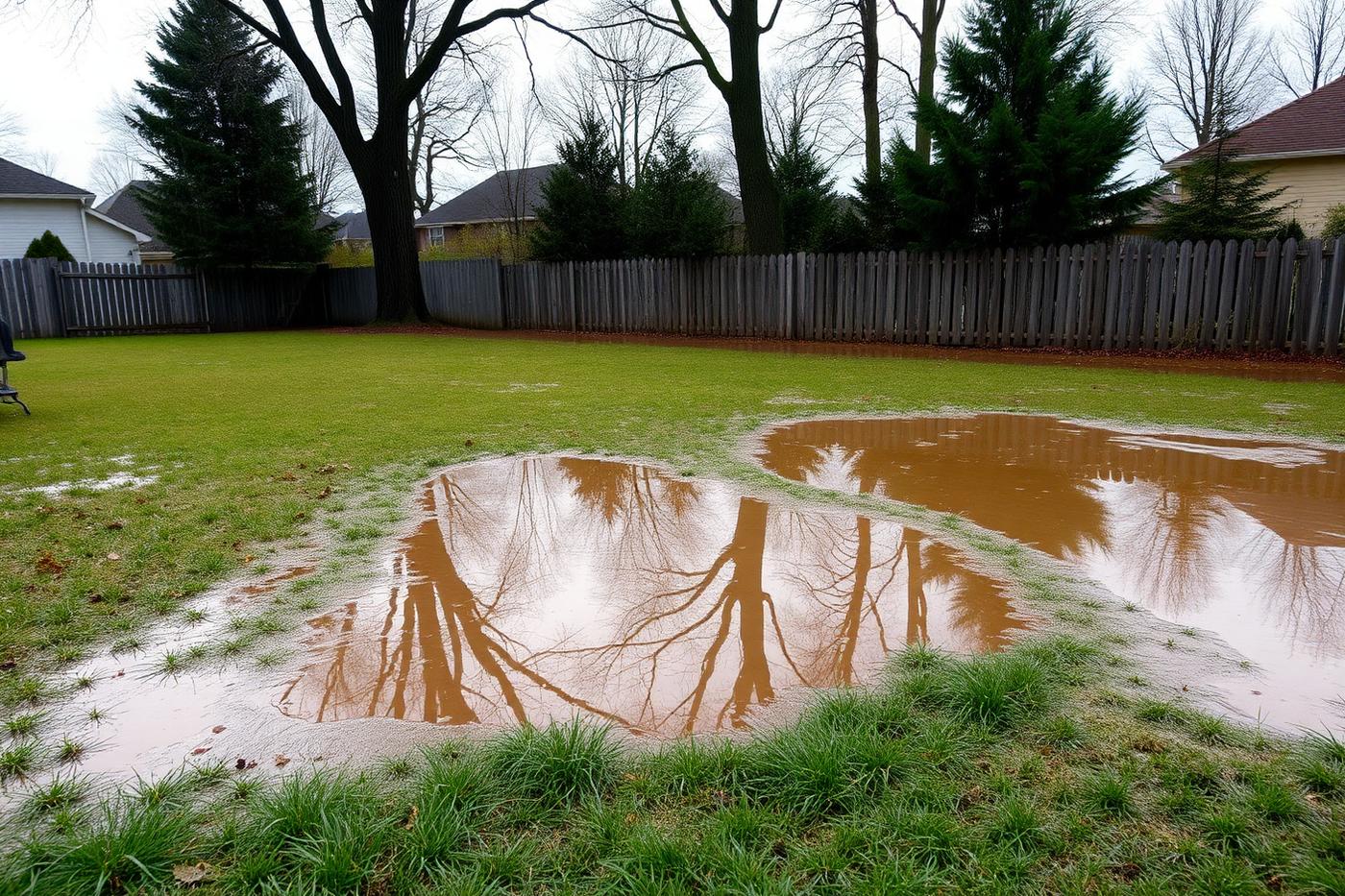
Most Birmingham yard drainage problems are not caused by a single defect. Rain lands on the roof, the driveway and the lawn at the same time, and every one of those surfaces sheds water somewhere. When the combined volume has no planned path off the lot, it stalls in the lowest spot it can find — usually the flattest part of the back yard, the strip beside the garage, or the base of a slope.
A yard drainage project starts by mapping that water. Where does it enter the property, where does it slow down, and where can it be discharged without pushing the problem into a neighbor's yard? Only after that does the answer become a French drain, a catch basin, regrading, buried downspouts, or a combination of two or three working together.
Symptoms
Signs your yard needs a drainage plan
- Water still standing 24 hours or more after the storm has passed
- Lawn stays spongy and rutted under foot traffic or a mower
- Moss, bare mud patches or algae in the same spot every season
- Mulch and topsoil washing across the lawn onto walkways
- Water tracking along the house instead of away from it
- Silt fans spreading where runoff leaves a slope
Diagnosis
Why the water stops where it does
No continuous fall to an outlet
Water only moves if the ground keeps falling. A yard can look sloped and still contain a flat shelf that halts flow.
Concentrated roof discharge
A single downspout can deliver hundreds of gallons in one storm to one square yard of lawn.
Compacted subsoil
Construction traffic, vehicle parking and heavy clay-loam layers reduce how fast the surface can absorb anything.
Off-site runoff
On sloped Birmingham lots, water arriving from uphill properties or the street can exceed everything your own roof produces.
Process
How a yard drainage project is built
1. Water mapping
Entry points, low spots, slope direction and a viable discharge location are identified first.
2. Capture
Catch basins, surface inlets or a trench line are placed where water actually collects, not where it is convenient.
3. Conveyance
Solid or perforated pipe carries the flow with consistent fall toward the outlet.
4. Discharge
A daylight outlet, pop-up emitter or approved drainage point releases water where it will not damage anything.
5. Restoration
Trenches are backfilled, graded and re-sodded or seeded so the lawn recovers.
Honest scoping
When a smaller fix is enough
- If the wet area sits directly under a downspout, extending that discharge underground may solve it on its own.
- If one shallow depression holds water in an otherwise well-draining lawn, regrading that area can be cheaper and less disruptive than piping.
- Full systems make sense when several sources converge, when the wet area is large, or when the lot has no natural fall.
Birmingham Metro
Birmingham context
Central Alabama receives well over fifty inches of rain in a typical year, and much of it arrives in intense bursts rather than steady drizzle. A drainage system sized for an average shower can still be overwhelmed by a single summer thunderstorm.
Many neighborhoods across the metro sit on hillsides and cut-and-fill lots, so water tends to travel between properties rather than soaking in place. Soils vary from sandy loam to dense clay-loam, and the difference matters — infiltration-based solutions behave very differently on the two.
Budget
What moves the price
Every project is priced on site conditions. These are the factors that push a project up or down within the estimated ranges in our Birmingham cost guide.
- Linear footage of pipe and trench
- Excavation depth and soil conditions
- Distance and elevation drop to a usable outlet
- Number of catch basins or inlets
- Equipment access through gates and side yards
- Sod, hardscape or landscape restoration
Want a figure for your specific property? Submit the project details and they can be reviewed by a professional serving your area.
Request a Drainage EstimateQuestions
Frequently asked
Surface water on a healthy lawn usually disappears within a few hours of the rain stopping. Water still standing the next day generally points to a low spot with no outlet, compacted soil, or more inflow than the area can handle.
Project request
Request Local Drainage Pricing
Two short steps. Share your ZIP code and the drainage problem, then your name and phone number so the request can be reviewed locally.
- ■No obligation and no cost to submit
- ■Takes less than a minute
- ■Your phone number is private form data