Reshaping the surface
Yard Grading & Regrading in Birmingham, AL
Pipes manage water. Grading changes where it wants to go in the first place — which is often the cheaper conversation.
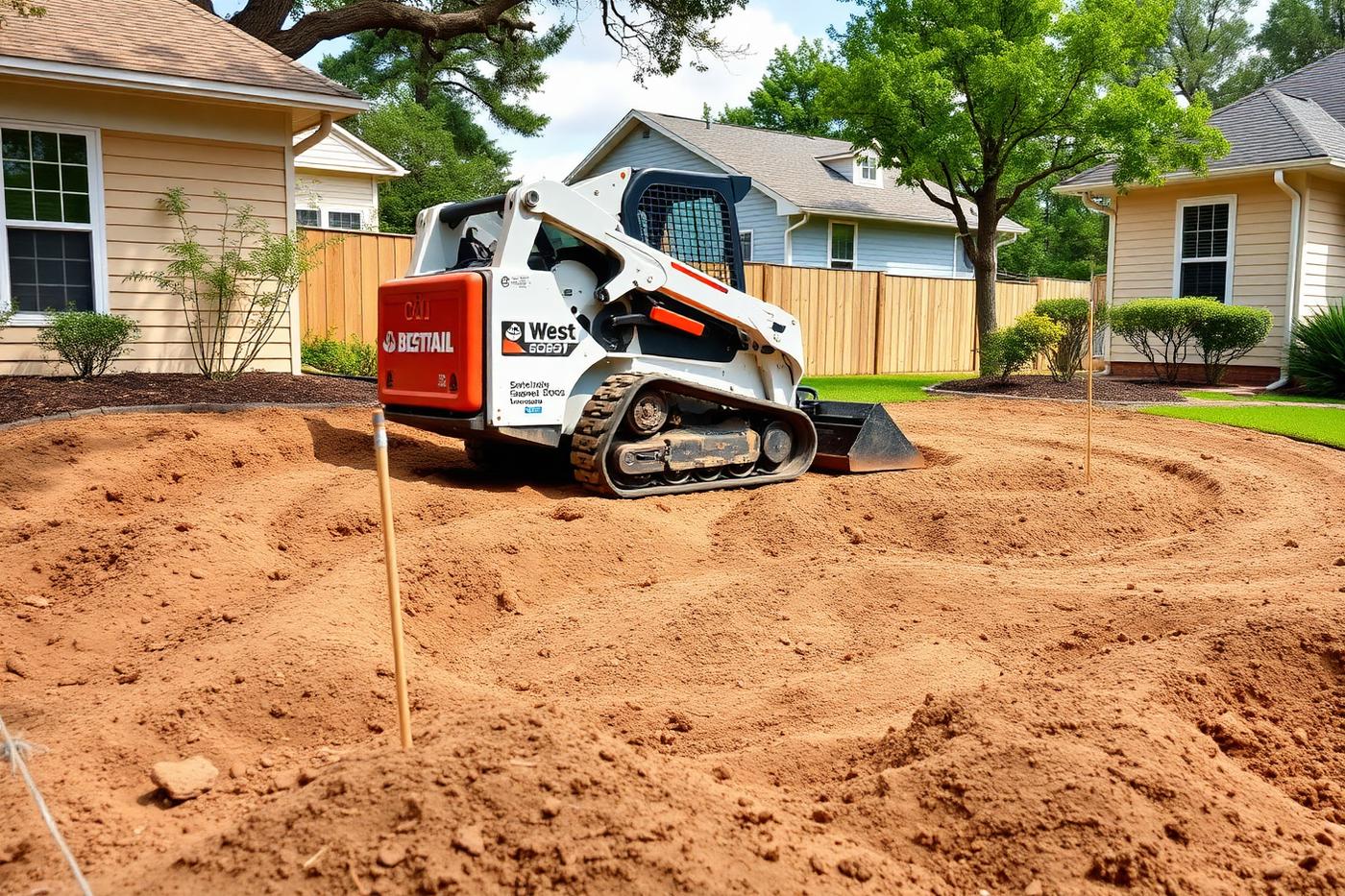
Regrading reshapes the ground surface so runoff moves in a chosen direction with continuous fall. That can mean rebuilding positive slope away from the foundation, filling a depression that traps water, or forming a shallow swale that guides flow around a structure toward a discharge area.
It is the most underused drainage solution in residential work because it produces no visible hardware. When the underlying issue is simply that the ground points the wrong way, no amount of pipe will outperform correcting the slope.
Diagnosis
How grades go wrong
Settlement after construction
Backfill around a foundation compacts over years and reverses the original slope.
Added landscaping
Beds, borders and imported soil raise grade against the house and dam water in place.
Erosion
Repeated runoff strips high ground and deposits it in low ground, flattening the fall.
Original site work
Some lots were finished with limited attention to drainage away from the structure.
Symptoms
Grading problems show up as
- Ground beside the house that is level with or higher than the surrounding yard
- Water visibly running toward the structure during rain
- A flat shelf mid-yard where flow stalls out
- Settled backfill along foundation walls or utility trenches
- Erosion channels cut across a slope
- Mulch and soil migrating downhill each storm
Birmingham Metro
Birmingham context
Established metro neighborhoods have decades of settlement and layered landscaping against foundations, which is one of the most common reasons water ends up beside a house that once drained fine.
On sloped lots, regrading has to consider where runoff goes next. Redirecting water is only a solution if it reaches a legitimate discharge area rather than a neighbor's yard.
Process
How a regrading project runs
1. Grade survey
Existing elevations, problem areas and the target discharge direction are established.
2. Design the fall
Positive slope away from the structure and continuous fall toward the outlet are planned.
3. Cut and fill
Material is moved, imported or removed to build the new surface with equipment sized for access.
4. Swale forming
Where needed, shallow swales are shaped to carry flow along a controlled path.
5. Stabilization
The graded surface is finished with sod, seed and erosion control so it holds its shape.
Budget
What moves the price
Every project is priced on site conditions. These are the factors that push a project up or down within the estimated ranges in our Birmingham cost guide.
- Area being regraded and volume of soil moved
- Imported fill or topsoil quantity
- Equipment access and gate width
- Removal or protection of existing landscaping
- Swale construction and erosion control
- Sod versus seed for restoration
Want a figure for your specific property? Submit the project details and they can be reviewed by a professional serving your area.
Request a Drainage EstimateHonest scoping
When grading is not enough on its own
- If the yard is already sloped correctly and water still stands, the problem is likely infiltration or an outlet, not surface shape.
- Tight side yards, mature trees and hardscape can limit how much the grade can be changed — piping fills the gap.
- Grading pairs naturally with buried downspouts: the roof volume is removed, and the remaining sheet flow is directed.
Questions
Frequently asked
Simpler residential grading work is commonly estimated in the $800–$2,500+ range. Complex grading combined with drainage installation costs significantly more. These are estimates only.
Project request
Request Local Drainage Pricing
Two short steps. Share your ZIP code and the drainage problem, then your name and phone number so the request can be reviewed locally.
- ■No obligation and no cost to submit
- ■Takes less than a minute
- ■Your phone number is private form data