Slope & wall water
Retaining Wall Drainage Solutions in Birmingham, AL
A retaining wall holds soil. Drainage decides whether it also has to hold water — which is a load most walls were never designed to carry.
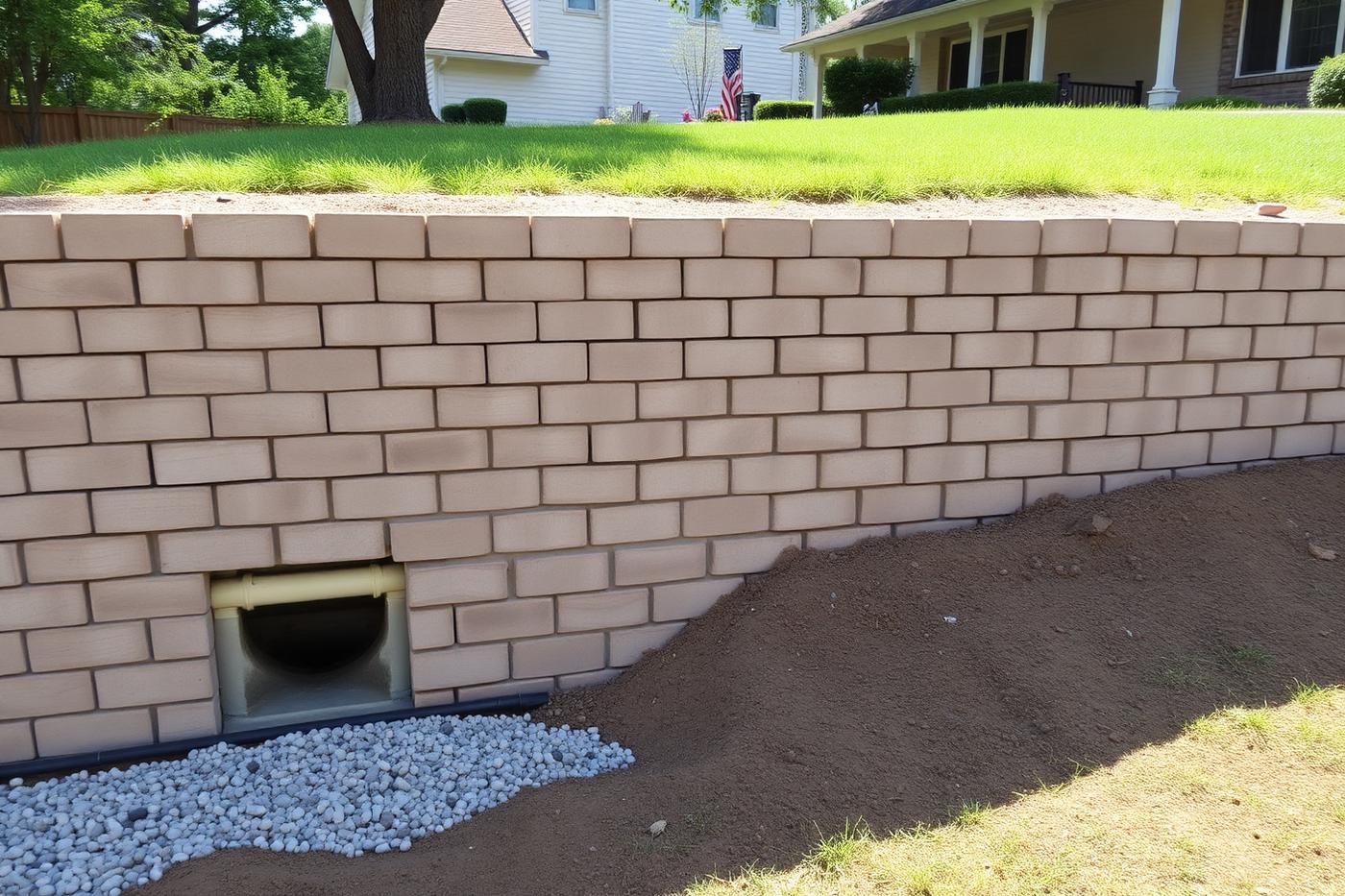
Saturated soil behind a wall exerts dramatically more pressure than drained soil. That is why hydrostatic pressure, not undersized block, is behind so many bulging, leaning and separating walls on sloped properties.
Wall drainage is a system: a drainage aggregate zone directly behind the wall, filter separation so soil does not clog it, perforated pipe at the base collecting what arrives, and a controlled outlet that releases water where it does no harm.
Diagnosis
Where the water comes from
Slope runoff
Everything uphill of the wall eventually arrives at it, in volume, during storms.
Missing drainage zone
Walls backfilled with native soil instead of aggregate have no path for water to move.
No outlet
A drain pipe with no functioning discharge fills and holds water against the wall.
Roof and hardscape above
Downspouts and patios discharging above the wall concentrate flow into the backfill.
Symptoms
Warning signs behind and around a wall
- Bulging, leaning or rotating wall sections
- Separation or stair-stepping between blocks
- Water weeping through joints or the wall face after rain
- Persistent wet ground or efflorescence at the wall base
- Soil settling or sinking in the area above the wall
- Erosion channels forming on the slope above
Birmingham Metro
Birmingham context
Tiered and terraced yards are widespread across the metro's hillside neighborhoods, and each tier passes runoff to the one below it. Drainage has to be considered across the whole sequence, not one wall in isolation.
Where soils lean toward clay-loam, water moves slowly through native backfill and lingers against the wall — which is precisely the condition an aggregate drainage zone exists to prevent.
Process
How wall drainage is put together
1. Assess the slope above
Contributing area, existing runoff paths and any roof discharge above the wall are identified.
2. Aggregate zone
Clean drainage stone behind the wall provides the void space water can move through.
3. Filter separation
Geotextile keeps fine soil out of the aggregate so the drainage zone stays open.
4. Base collector pipe
Perforated pipe at the wall base gathers water along the full length.
5. Controlled outlet
The collector daylights at one or both ends, or ties to a piped route away from the wall.
6. Surface management
Grading, swales or a drain line above the wall reduce how much reaches the backfill at all.
Budget
What moves the price
Every project is priced on site conditions. These are the factors that push a project up or down within the estimated ranges in our Birmingham cost guide.
- Wall length and height
- New construction versus retrofit access
- Volume of drainage aggregate required
- Pipe length and outlet construction
- Surface grading or swale work above the wall
- Landscape restoration on the terrace
Want a figure for your specific property? Submit the project details and they can be reviewed by a professional serving your area.
Request a Drainage EstimateHonest scoping
Existing walls versus new construction
- On a new wall, drainage is built in as part of construction and is far less expensive than retrofitting.
- On an existing wall, surface interception above the wall is often the least invasive improvement and can meaningfully reduce loading.
- Structural movement is a different question from drainage. A wall that has already rotated may need evaluation beyond water management.
Questions
Frequently asked
Saturated backfill dramatically increases the pressure on the wall. Drainage relieves that pressure by giving water a path out instead of letting it build up behind the structure.
Project request
Request Local Drainage Pricing
Two short steps. Share your ZIP code and the drainage problem, then your name and phone number so the request can be reviewed locally.
- ■No obligation and no cost to submit
- ■Takes less than a minute
- ■Your phone number is private form data